


Back to Practices
Our Practices


Solutions


Consulting
Data and Intelligent Operations
Silver Tree's data practice builds the governed foundation, executive reporting, and predictive models that AI, IT operations, security, and business applications all depend on.
A mid-market company can grow revenue while losing money, and not know it until someone interrogates the data.
Gartner predicts that through 2026, organizations will abandon 60% of AI projects that aren't supported by AI-ready data. The same research found 63% of organizations either lack the right data management practices for AI or aren't sure they have them.
Silver Tree treats data as the operating layer for the whole business. One governed foundation feeds the dashboards your leadership team reviews, the models that forecast the next quarter, and the AI your board is asking about. Decisions get made on evidence, and every other practice gets faster because of it.
Book an Advisory Session




Business
Applications

Security
Operations

Governance
And Management

AI

IT Operations
Data and Intelligent Operations
20%
Higher profitability for companies whose leaders govern on evidence
60%
Of AI projects without AI-ready data will be abandoned through 2026 (Gartner)
3x
Faster data project delivery for a global non-profit
87%
Faster report refresh on Save the Children's AWS data platform
In a company of 150 to 1,500 people, the leadership team runs on reports someone assembles by hand after the month closes. Finance, operations, and sales each bring a different number to the table. That one weakness shows up in the three places a CEO answers to the board for.

Margin slips before anyone sees where
Pricing, staffing, and inventory calls wait on reports that are weeks old. Without forecasting, every decision responds to last month, and the quarter absorbs the cost.

Investments with no proof of return
ERP, CRM, and AI programs go live without a measured baseline, so nobody can show what they returned. 46% of US CEOs say they still can't measure AI ROI (Conference Board, January 2026).

Compliance resting on spreadsheets
Without data lineage, access controls, and quality rules, audit and regulatory reporting depend on manual reconciliation. Exposure surfaces late, when it costs the most to fix.
In its March 2026 data and analytics predictions, Gartner forecasts that by 2030, universal semantic layers, the shared business definitions that make every report and AI model agree, will be treated as critical infrastructure next to data platforms and cybersecurity.
For a mid-market company, that changes the budget conversation. Data becomes infrastructure the CEO is accountable for,
the same way security already is.
By 2030
Gartner, March 2026
Universal semantic layers treated as critical infrastructure, alongside data platforms and cybersecurity.
By 2030
Gartner, March 2026
50% of organizations will use autonomous AI agents to turn governance policies into machine-verifiable data contracts.
Through 2026
Gartner, February 2025
Organizations will abandon 60% of AI projects unsupported by AI-ready data.
Silver Tree runs six practices and three service models. The data practice is the only one each of the others depends on. When it's built well, AI ships to production, IT runs on real performance data, and security reporting holds up to an auditor.
Governed, AI-ready data is the first requirement for an AI360 Secure engagement. Models trained on inconsistent data produce confident wrong answers.
Vigilance turns service, asset, and performance data into real-time SLA reporting the COO can read without an IT translator.
Data lineage, access controls, and quality rules give security and compliance teams evidence they can show a regulator.
NetSuite, Salesforce, Workday, and ServiceNow only pay off when their data connects. Integration and master data management make that happen.
KPI frameworks and executive dashboards give the PMO and the board the same version of performance.
Data architects, engineers, scientists, and fractional Chief Data Officers, vetted by the practitioners who run this work.





Trusted Data
Get your data right, build BI as the bridge, and only then can AI deliver real value.
Each layer builds on the one beneath it. Clients enter where their maturity is, and every engagement keeps the full stack in view so the next layer has something solid to stand on.

Reliable, high-quality data ready for insight and scale
Trusted data foundation, integrated pipelines, and governed architecture, on modern platforms including lakehouse and data fabric, with master data management, data quality, and observability.

Real-time visibility for faster, confident decisions
Executive dashboards, a KPI framework, and self-service insights, plus BI modernization and migration off legacy reporting.

Predictive intelligence that improves performance and drives growth
Predictive models, forecasting and optimization, scenario planning, and performance attribution.
The ability to tag your data, sort
your data, manage your data, curate your data, keep it consistent,
reduce duplication, is critical to get trusted data.


Best fit: maturity score 1 to 3. Data and foundational BI.
Data quality audits, governance policies, cloud infrastructure strategy, and foundational BI dashboards that build a trusted data foundation.

Best fit: maturity score 3 to 4. BI, analytics, and emerging AI.
A business-aligned data strategy, BI and analytics enablement, AI readiness evaluation, and pilot use cases with
clear KPIs.

Best fit: maturity score 4 to 5. Advanced analytics and AI.
Monetization models, GenAI, ML, and automation adoption, and scaling advanced analytics across capabilities.
The Data Maturity Assessment scores your organization across four areas, data, business intelligence, analytics, and AI, and places you on one of four maturity levels. The score points to the right offering and the first initiatives worth funding.
1
Step 01
Data is fragmented and unreliable, with no structured analytics or AI. Decisions are largely intuition-based.
2
Step 02
Basic reporting and dashboards exist and early AI experiments begin, but insights are limited and don't scale.
3
Step 03
Predictive analytics and AI deliver measurable value in some areas, though adoption is uneven and siloed.
4
Step 04
Data and AI are integrated across the business, driving automation, personalization, and competitive advantage.

Stakeholder workshops, a review of data, BI, analytics, and AI readiness, and a prioritized list of opportunities. These are the Align and Assess stages of Silver Catalyst, delivered on their own or as the start of a full program.
Identifies where AI would create measurable value in your workflows, and what data has to be in place first.







assessments, blueprints, and accelerators that deliver repeatable outcomes.
Silver Tree runs and improves your data platform and reporting, with accountability for performance.
data architects, engineers, and fractional Chief Data Officers added to your team.
It's great to be by the side of an organization that has the same philosophy in mind. The sync between the two organizations is lockstep, and we've locked arms throughout this process.

Production tickets cut from 10 to 15 a month to 0 to 2. Report refresh up to 87% faster. Development and testing effort down 50 to 60%.

100% data reliability across consolidated sources. 40% cost savings. Projects delivered 3x faster.
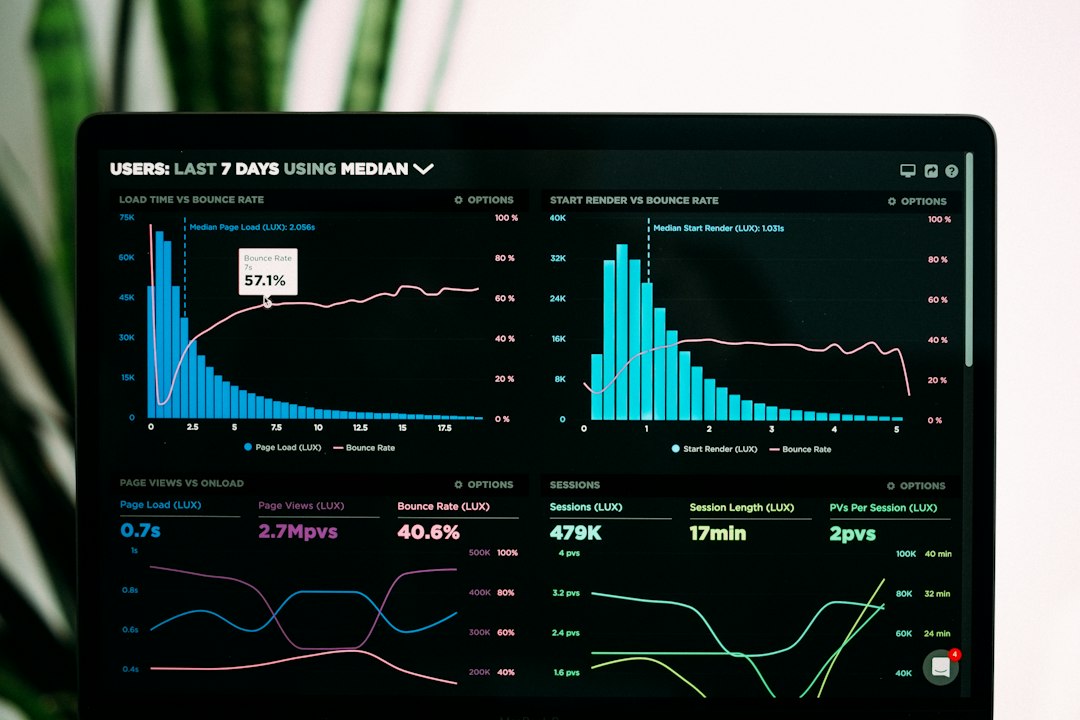
A new CEO had to find $23M in savings for the board. Silver Tree's assessment surfaced over $6M across IT and operations in the first phase, with a prioritized roadmap to reinvest it in growth.




Talk with the Silver Tree data practice leader about where your numbers disagree, and what a governed foundation would change for every decision built on them.